It’s no secret that constructing a well-developed again entails loads of pulling workout routines and sufficient protein to help your strength- and muscle-building efforts. Whereas there are totally different routes you possibly can take to realize that sculpted look, the best back workouts revolve round a traditional pull-day staple: the row.
The variety of row variations to select from could really feel overwhelming, however you possibly can’t go incorrect with two of the simplest choices: the chest-supported row and the bent-over row. However what reigns supreme within the battle between a bench-based again builder and a freestanding barbell motion?
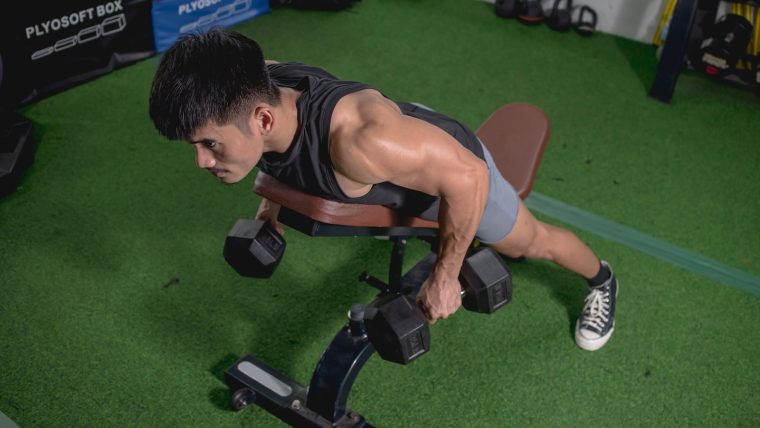
We’ll dive deeper into their variations and similarities, break down the best way to carry out every one safely, and focus on the advantages and disadvantages of each so you will get probably the most bang on your buck throughout your subsequent pull-day session.
Desk of Contents
Key Variations
- The bent-over row includes the complete posterior chain and requires important core activation. However, the chest-supported row recruits your upper-back muscle tissue whereas principally eradicating your decrease half from the equation.
- The chest-supported row is mostly safer for each novices and superior lifters because the weight bench supplies stability and safety on your backbone. In the meantime, the dearth of help with a bent-over row can restrict the person’s potential to correctly have interaction the again since they’re directing effort to stabilize their physique in a bent-over place.
- In contrast to the chest-supported row, the bent-over model immediately carries over to different actions just like the deadlift and good mornings, because it teaches you the best way to hip-hinge accurately.
[Related: Lat Pulldown vs. Pull-Up: The Battle for a Bigger Back]
Key Similarities
- Each row variations primarily work the latissimus dorsi (lats), making both motion a improbable alternative on your again or pull-day exercise.
- Your grip strength can be put to the check with every train. Rowing will enable you to develop a stronger grip (and forearms), which may repay when performing workout routines like cleans, snatches, and shrugs. (In case you’re making an attempt to focus on your again muscle tissue and your grip energy is a limiting issue, take a look at our listing of the best lifting straps.)
- The bent-over row and the chest-supported row will help add thickness and total dimension to your upper- and mid-back, particularly in case you differ your grip to focus on particular areas.
Muscle tissue Labored
Just like the bent-over row, the chest-supported row includes a number of upper-back muscle tissue — primarily the latissimus dorsi (lats), trapezius (traps), and rhomboids. Your lats, that are the most important again muscle tissue, are the primary mover throughout any row variation. In the meantime, your traps assist stabilize your scapula, and the rhomboids play an essential position in shoulder stabilization.

Along with your lats, traps, and rhomboids, your posterior deltoids — the again shoulder muscle tissue that connect to your shoulder blades — additionally act as prime movers in the course of the bent-over row and the chest-supported row. Plus, each row variations contain ample biceps activation, as this two-headed muscle assists with flexing your forearm and elbow. As you retract your shoulder blades throughout a row, your biceps assist your arm bend on the high of the motion. You may also improve the stimulus through the use of a supinated (palms-up) grip.
Nevertheless, the bent-over row includes a number of muscle teams and joint constructions that the chest-supported model doesn’t. Most notably, this multi-joint motion recruits your hamstrings, glutes, and spinal erectors to forestall any rounding as you pull the barbell towards your physique from a hip-hinge place. General, your legs and core should put in an equal quantity of effort as your higher physique to carry out this train safely and successfully.
[Related: What Muscles Do Push-Ups Work? Get More Out of This Timeless Exercise]
When to Do the Chest-Supported Row
Typically, selecting a chest-supported row merely makes extra sense. Whether or not you’re new to lifting, therapeutic from an harm, or trying to goal particular components of your again, listed here are a number of eventualities the place a chest-supported row works finest:
You’re a Newbie
Simply began energy coaching? Reasonably than danger getting damage performing a extra technical motion, persist with the model higher suited to novices. The chest-supported row teaches you the best way to have interaction your core and excellent your pulling method from a seated place that retains your backbone secure.
Whereas you could have to begin with lighter dumbbells, you possibly can rapidly improve the load in case you stay constant together with your strategy. Plus, the chest-supported row offers you an opportunity to find out how altering variables akin to your grip, the angle of the burden bench, and time beneath rigidity can have an effect on your outcomes. For instance, an overhand (pronated) grip will result in extra rear delt and upper-back activation since your elbows come out out of your physique. An underhand (supinated) grip retains the elbows nearer, forcing your traps and biceps to step up their sport.

You’re Working Your Approach Again From Harm
In case you’ve been sidelined by a again harm and are able to resume coaching, the chest-supported row is a brilliant alternative. Utilizing a bench for help decreases the strain in your backbone and core, permitting you to give attention to performing the motion utilizing exact method.
Begin with lighter weights to set your self up for long-term success by rebuilding your energy, stamina, and confidence one rep at a time.
You’re Chasing Bodybuilding or Physique Objectives
If you wish to develop a extra outlined, muscular again, the chest-supported row allows you to goal your lats, rhomboids, and traps with out your decrease again and core being a limiting issue. In spite of everything, sustaining a hinged place whereas rowing a heavy load could be very tiring.
From there, you possibly can tailor the train to help your physique objectives by going heavier, altering the tempo, altering the incline angle, or experimenting with totally different set and rep ranges. Both means, the chest-supported row stands out as an apparent alternative if you wish to isolate sure muscle tissue on again day.
When to Do the Bent-Over Row
There’s a purpose the bent-over row is close to the highest of each best back exercise list: it produces outcomes. From athletes aiming to get extra explosive to individuals who have to develop stronger posterior chains to lifters on the lookout for a option to develop an even bigger again, listed here are conditions the place you may make the bent-over row the star of the present.
You’re Coaching for Olympic Weightlifting or Powerlifting
All energy and energy athletes ought to embrace a bent-over row variation of their routine. Olympic weightlifters can profit from this train through the use of it as a primer for the clear and jerk, which requires explosive motion and a powerful higher again.
Plus, powerlifters who need to improve their deadlift PR can even make the most of the bent-over row to assist attain that aim. Getting snug with hinging on the hips, mastering the best way to brace your core, and studying the best way to totally have interaction your lats and different again muscle tissue will solely enable you to carry out even higher when it’s time to step as much as the barbell.

Moreover, bent-over rows may give you a leg up on the squat and the bench press. Creating your traps will create a stronger shelf for the bar to relaxation on — a serious benefit when squatting heavy masses. When it’s time to bench, having a powerful higher again will can help you preserve a greater arch and stay secure as you decrease the bar towards your chest.
You Wish to Strengthen Your Posterior Chain
A weak posterior chain can contribute to low again ache and poor posture. Though it’s a little bit of a double-edged sword, the bent-over row will help you in that space by strengthening key muscle tissue like your spinal erectors and hamstrings — each of that are recruited closely to stay in a powerful hip-hinge place.
In keeping with a 2021 evaluate on therapy for continual low again ache, 12-16 weeks of posterior chain resistance coaching had a considerably larger impact than normal train on ache, stage of incapacity, and muscular energy. (1) So, whilst you shouldn’t attempt to max out on the bent-over row in case you’re making an attempt to construct a wholesome posterior chain, you possibly can actually incorporate it right into a program that features fundamental core exercises like lifeless bugs, chicken canine, and planks.
You Wish to Add General Measurement and Energy
If rising a thick, dense wall of muscle alongside your again issues most, make the bent-over row the primary elevate in your pull day. A 2009 examine evaluating three row variations discovered that this train produced massive activation symmetrically from the higher to decrease again, supporting the thought of the bent-over row as a go-to motion for including dimension and energy. (2) General, a compound motion will contain extra muscle engagement than an isolation train just like the chest-supported row.
Tips on how to Do the Chest-Supported Row
To carry out a chest-supported row, you will have a pair of dumbbells and an adjustable weight bench. Altering the incline stage (in addition to your grip) can alter the way you assault your again exercise by stimulating particular muscle tissue.
Right here’s a step-by-step information to executing the chest-supported row with the right method.
- Set your bench to a 45-degree angle. Seize your dumbbells and lie chest-down on the bench with the weights by your sides and your palms going through inward.
- Press your toes into the ground, have interaction your glutes, and brace your core to create rigidity all through your torso.
- Whereas sustaining a impartial backbone and head angle, retract your shoulder blades and pull your elbows towards the ceiling till they kind a 90-degree angle.
- Squeeze your upper-back muscle tissue on the high of the motion for one to 2 seconds, then fastidiously decrease the weights again to the beginning place. Hold constant rigidity in your abs to guard your decrease again as you full your set.
[Related: How to Do the Pendlay Row]
Tips on how to Do the Bent-Over Row
The bent-over row requires simply two items of kit: a barbell and weight plates. If attainable, use high-quality bumper plates so that you don’t have to fret about noise points. Whereas you may as well carry out this train with a pair of dumbbells, this breakdown covers the best way to do the normal barbell bent-over row.
Right here’s a step-by-step information that may enable you to grasp the nuances of this compound motion:
- Stand behind a barbell together with your toes shoulder-width aside.
- Hinge on the hips by conserving your again straight and bending your knees barely.
- Seize the bar together with your fingers barely wider than your shoulders utilizing a pronated (palms-down) grip.
- Have interaction your glutes and core, deadlift the bar off the ground, and lean ahead to kind a 45-degree angle.
- Whereas conserving a impartial backbone, pull your elbows again till the bar touches your midsection.
- Maintain the contraction for one second earlier than slowly decreasing the barbell till your arms are prolonged and the burden plates are simply above the bottom.
Advantages of the Chest-Supported Row
The chest-supported row presents loads of intriguing potential for lifters trying to construct a powerful, outlined again. Let’s study a number of key advantages of performing this train.
Added Stability
The largest advantage of the chest-supported row is undoubtedly being able to coach your again with the built-in stability of a bench. That is nice for each novices and superior lifters who need to attain their energy and hypertrophy objectives with out having to be taught a sophisticated method or fear almost as a lot about core or lower-back limitations.
Takes Benefit of Unilateral Coaching
Versus bilateral workout routines just like the barbell bench press or the back squat, the chest-supported row allows you to assault either side independently. Unilateral training is helpful in that it means that you can tackle any imbalances and removes the opportunity of one facet shouldering extra of the load. Supersetting the chest-supported row with one other unilateral train like single-arm lat pulldowns can take your again exercise to a different stage.
Simpler Restoration
The less-taxing nature of the chest-supported row makes it simpler to get well throughout and after your exercise. This motion doesn’t demand almost the identical depth or total muscle recruitment as a compound train just like the bent-over row.

You need to have the ability to catch your breath, reset, and be able to go for at the least a number of units earlier than transferring on to the subsequent train.
Cons of the Chest-Supported Row
Though added stability and simpler restoration stand out as positives, there are some drawbacks to the chest-supported row, together with:
Requires Extra Gear
Sadly, in case you don’t have an adjustable weight bench, you gained’t have the ability to carry out the chest-supported row. Plus, you want a pair of dumbbells (or kettlebells) that present sufficient of a problem. With out the requisite instruments, you’ll have to flip to different again workout routines that don’t require a bench (such because the inverted row) or may be carried out with out tools (like Superman holds).
Much less General Muscle Engagement
There’s a tradeoff for extra stability: much less muscle engagement. Since you’re seated together with your chest towards the bench, your core and legs get a little bit of a break. So regardless that the chest-supported row works effectively for hitting your lats, rhomboids, traps, and biceps, it falls in need of the bent-over row in what number of muscle teams it recruits.
Can’t Go as Heavy
The awkward physique place of the chest-supported row could make it tougher to leap up in weight. Working at the usual 45-degree angle offers you sufficient vary of movement to drag and squeeze, however solely to a sure diploma. Even in case you’re an skilled lifter with a strong energy base, you’ll rapidly understand it may be troublesome to regulate heavier dumbbells and squeeze out clear reps.
Advantages of the Bent-Over Row
Whether or not you’re a bodybuilder, energy athlete, or normal health club goer, the bent-over row presents a wealth of potential muscle- and strength-building advantages.
Carryover to Different Pulling Workout routines
Whether or not it’s pull-ups, deadlifts, or the cable seated row, you possibly can put your self in a greater place to carry out effectively at different pulling workout routines by way of the bent-over row. Constructing energy and endurance in your lats and traps will carry over to muscle-building workout routines like dumbbell pullovers, lat pulldowns, and face pulls.

Plus, coaching your glutes, hamstrings, and core to deal with a rowing movement from a bent-over place will provide you with a stronger trunk to deal with no matter deadlift variation you like.
Compound Motion
In keeping with a 2017 examine on resistance coaching modalities, multi-joint workout routines are more practical for enhancing muscle energy and maximal oxygen consumption than single-joint ones. (3) That makes one thing just like the barbell bent-over row an important bang-for-your-buck alternative on your coaching protocol. Not solely does it construct upper-body energy, but it surely additionally stimulates your belly and leg muscle tissue from begin to end.
Improved Posture
A sedentary life-style can result in slouched shoulders, weak spinal erectors, and disengaged glutes. The bent-over row will help counteract that by permitting you to strengthen your posterior chain. As you progress, you shouldn’t be stunned to see an enchancment in your posture and a discount in decrease again points.
[Related: 6 Deadlift Benefits Everyone Should Know About]
Cons of the Bent-Over Row
Is the bent-over row the best pull-day motion for you? Earlier than you pencil it into your program, listed here are some cons to think about.
Harm Danger
Though it may be nice for creating explosive energy and upper-back energy, the bent-over row may be harmful if performed incorrectly. Sustaining correct kind could be a main problem, as you should cohesively coordinate a number of muscle teams and joint complexes to can help you maintain a loaded hip-hinge place during your set.
Only a slight slippage in kind — akin to rounding your decrease again or barely shifting your hips to at least one facet — can result in a strained muscle, ligament, or extra extreme harm. Whether or not you repeatedly carry out the bent-over row incorrectly otherwise you simply lose focus for one rep, you run the chance of experiencing a setback that would derail your coaching plans.
Grip Energy Limitations
In case you’re taking the glass-half-empty view, one of many drawbacks to the bent-over row is that your grip energy is a limiting issue. In case your forearms and fingers can’t deal with holding, lifting, and decreasing a loaded barbell repeatedly, you’ll battle to execute the motion successfully or effectively. This will also be the case with the chest-supported row in case you use heavy dumbbells.
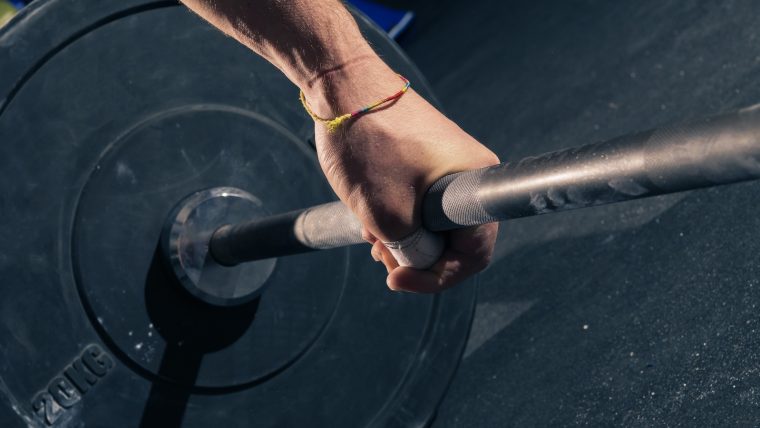
You may overcome this drawback by constantly engaged on grip strength exercises or utilizing lifting straps for help. Whereas the previous will enable you to get higher at bent-over rows and different lifts that require good grip energy, the latter will allow you to work with heavier masses by conserving your fingers securely fixed to the barbell.
Demanding on Decrease Again and Core
Compound workout routines just like the bent-over row basically put your total physique to the check. Whereas there are actually advantages to recruiting a number of muscle teams in a single motion, your coaching session can rapidly go south in case you don’t have a well-developed core.
Hinging on the hips and remaining in that near-horizontal place whereas pulling the burden vertically locations important stress in your decrease again and belly muscle tissue. As soon as fatigue units in, chances are you’ll battle to maintain the right kind or should put down the barbell totally.
Utilizing Momentum
Whereas the chest-supported row forces you to make use of correct kind by conserving your chest towards the bench, the freestanding place of the bent-over row opens the door to utilizing momentum to elevate the burden. In case you go too heavy, get fatigued, or lose focus, it’s straightforward to cheat the following reps by swinging or jerking the barbell relatively than sustaining rigidity and executing strict, managed reps. Not solely will this restrict the effectiveness of the train, but it surely may additionally result in an harm.
Row Until You Develop
The battle between the chest-supported row vs. the bent-over row doesn’t essentially have a winner or a loser. Each workout routines provide distinctive advantages that may help with sculpting the again of your goals. On the similar time, there are notable variations between the 2 rowing variations that may make one or the opposite a extra logical alternative primarily based in your particular person objectives.
Finally, your finest guess is to incorporate each the chest-supported and bent-over variations in your exercise plan. That means you possibly can pack severe dimension in your body, develop higher posterior chain and grip energy, and reap all of the rewards of rowing — one pull at a time.
FAQs
As a result of every variation brings distinctive advantages, it’s powerful to say one is inherently higher. Nevertheless, in case you’re targeted on gaining probably the most dimension and energy, the bent-over row is the superior alternative. That mentioned, the chest-supported row continues to be helpful for coaching your upper- and mid-back and is mostly simpler to carry out, making it a strong possibility for novices.
Regardless of their title variations, each describe the identical train. Whether or not you name it a chest-supported row or an incline row, you will have an adjustable weight bench and a pair of dumbbells to help your back-building efforts.
The best physique place for a bent-over row requires a ahead lean of about 45 levels. Though you possibly can go just a little additional (round 60 levels is my desire), hinging your hips to 90 levels will put extra stress in your posterior chain and will make the train tougher to carry out repeatedly.
References
- Tataryn, N., Simas, V., Catterall, T., Furness, J., & L. Keogh, J. W. (2021). Posterior-Chain Resistance Coaching In comparison with Basic Train and Strolling Programmes for the Remedy of Continual Low Again Ache within the Basic Inhabitants: A Systematic Assessment and Meta-Evaluation. Sports activities Drugs – Open, 7. https://doi.org/10.1186/s40798-021-00306-w
- Fenwick CM, Brown SH, McGill SM. Comparability of various rowing workout routines: trunk muscle activation and lumbar backbone movement, load, and stiffness. J Energy Cond Res. 2009 Mar;23(2):350-8. doi: 10.1519/JSC.0b013e3181942019. PMID: 19197209.
- Paoli, A., Gentil, P., Moro, T., Marcolin, G., & Bianco, A. (2017). Resistance Coaching with Single vs. Multi-joint Workout routines at Equal Complete Load Quantity: Results on Physique Composition, Cardiorespiratory Health, and Muscle Energy. Frontiers in Physiology, 8. https://doi.org/10.3389/fphys.2017.01105
Featured Picture: Jasminko Ibrakovic / Shutterstock
Trending Merchandise

FITINDEX Vibrating Foam Roller 5-Sp...

Resistance Bands for Working Out wi...



Sunny Health & Fitness Squat As...